


Benign prostatic hyperplasia (BPH) is a condition in which the prostate is enlarged. It is a common
condition in men over 45 years of age and may cause bothersome urinary symptoms such as getting
up multiple times during the night to urinate, a weak stream, or urgency. This condition may significantly
reduce quality of life.1,2
It’s common for men to believe that symptoms of enlarged prostate are a normal and inevitable part of
the aging process and are simply meant to be accepted and tolerated. Many men wait a long time to
get their symptoms evaluated by a doctor. However, if left untreated, BPH may lead to serious
complications such as permanent bladder damage and even kidney failure.2,3
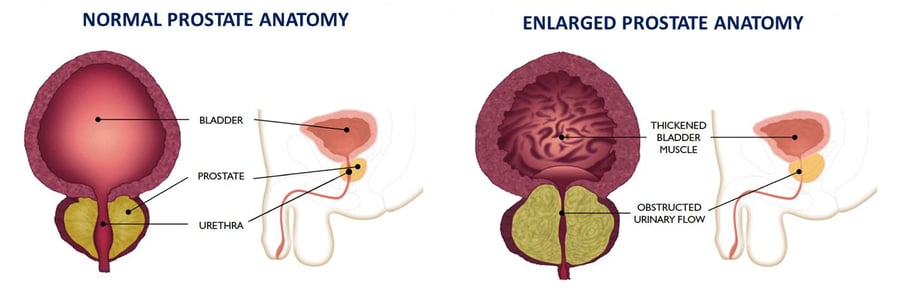
Here is a simple graphic showing what happens as the prostate continues to enlarge as BPH
progresses. As the prostate gland enlarges, the urethra is constricted. The bladder has to work harder
to push the urine out. Over time, the bladder muscle becomes thick and stiff, and loses its ability to
effectively push urine out.
Roehrborn CG, McConnell JD. In: Walsh PC et al, eds. Campbell’s Urology. 8th ed. Philadelphia, Pa: Saunders;2002:1297-1336.
Do BPH medications help long-term bladder health?
While medications may partially relieve and slow the progression of symptoms, BPH drugs do not
address prostate obstruction or bladder deterioration.2
What happens if BPH goes untreated for too long?
Changes to the bladder may become irreversible and result in permanent bladder damage, which can lead to the need for a permanent bladder catheter. A large, long-term study conducted by the U.S. Veteran’s Affairs showed that Watchful Waiting can come with a cost by increasing the risk of irreversible bladder damage.4
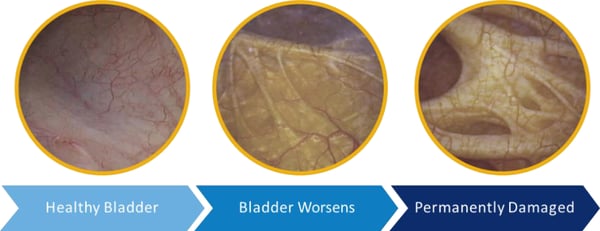
Earlier intervention treatments, such as minimally invasive BPH procedures, may preserve bladder health and improve your quality of life.2
The impact of BPH on your bladder health should not be ignored. To learn about the importance of your bladder health, how it affects your BPH, and treatment options, click here.


