

Living With BPH
Are urinary symptoms slowing you down?
Symptoms of an enlarged prostate, also known as Benign Prostatic Hyperplasia (BPH), can really impact your lifestyle – from planning bathroom stops to avoiding activities you used to enjoy. If you can relate, it may be time to take action.

-
Enlarged prostate (BPH) can cause frequent urination, urgency, weak stream, and difficulty emptying the bladder
-
Symptoms can disrupt sleep and daily activities, impacting quality of life
-
Without treatment and even while on meds, symptoms may worsen and affect bladder health
Do you avoid events or activities because of your urinary symptoms?
50%
Nearly half of men surveyed have avoided activities they enjoy because of their urinary symptoms.*

Have you limited beverages to avoid a frequent or urgent need to urinate?
3/4
About 3 in 4 men surveyed have limited fluid intake in the evening to avoid getting up at night to urinate.*

Is it hard to make it through a movie without having to visit the men's room?
60%
Over 60% of men surveyed couldn't make it through a movie without getting up to urinate 2 or more times.**
Signs of an Enlarged Prostate
If you’ve been struggling with these or other lower urinary tract symptoms, it's time to take care of #1. A great first step is to take the BPH Quiz and share your results with a primary care doctor or urologist.
- Need to urinate frequently, day and night
- An urgent need to go
- Weak or slow urinary stream
- Stream stops and starts
- Difficulty emptying bladder completely
Meet Mike. He lives an active lifestyle. Between hanging out with his buddies and spending time with his wife, life is good. Except Mike started noticing problems with his urination in the past year, like having to wake up several times a night and always needing to find a bathroom when he is out. Mike was making too many pit stops. These symptoms could mean that Mike has an enlarged prostate, a condition called benign prostatic hyperplasia, or BPH. A man's prostate grows over time and can compress the urethra, blocking the passageway and preventing normal urine flow. This progressive condition is very common among men as they age. In fact, over forty percent of men in their 50s have BPH, and the number grows to over seventy percent of men in their 60s. BPH has nothing to do with prostate cancer, but it can greatly affect a man's quality of life. As the prostate grows, it can block the urinary channel and cause bothersome symptoms, such as an urgent and frequent need to urinate. Men suffering from BPH often make multiple trips to the bathroom during the night, which can affect their sleep and relationships. Control. The good news is the symptoms of BPH are usually treatable. Talk with your urologist about which treatment option is best for you. In diagnosing your enlarged prostate, your doctor may evaluate your condition by performing some diagnostic tests. Your urologist will determine which tests to perform based on your symptoms and other health conditions. If your symptoms are mild, your urologist may suggest watchful waiting, which involves modifying behavior and lifestyle as symptoms worsen. It can include drinking less before bedtime and making sure there's a bathroom nearby. Physical discomfort and symptoms typically get worse over time, making it harder to reduce symptoms later. BPH medications may relieve and slow symptom progression, but can take several weeks to work and require continual use. For some patients, they can become less effective over time and sometimes fail to provide adequate relief. They may cause unwanted side effects like dizziness, fatigue, and sexual dysfunction. BPH medications do not fix blockage caused by an enlarged prostate, which if left untreated can lead to bladder obstruction, deterioration, and loss of function. Surgery to remove part of the prostate is generally recognized as an effective treatment for BPH. However, it may come with discomfort and long recovery time, erectile and ejaculatory dysfunction, and frequent need for the use of a catheter. Mike's doctor told him about the system, the number one minimally invasive BPH procedure chosen by urologists and their patients in the US. The system is typically a one time outpatient procedure that can provide rapid relief and recovery while preserving sexual function. The procedure uses small implants to hold open the obstructed pathway, unblocking the urine flow. With the system, Mike has discovered an option that can free him from his BPH medication without the potential downsides of more invasive surgery, so he can get back to what matters most. More than half a million system treatments have been completed worldwide, providing durable results and lasting relief from BPH symptoms. Ask your urologist if you are a candidate for the UroLift System. Click the physician finder on urolift dot com to find a board certified urologist who performs the UroLift System procedure near you. Most common side effects are temporary and can include discomfort when urinating, urgency, inability to control the urge, pelvic pain, and some blood in the urine. Rare side effects including bleeding and infection may lead to a serious outcome and may require intervention.
Watch 2-minute video: Mike explores solutions for his BPH symptoms
BPH Symptoms Can Impact Your Quality of Life
Enlarged prostate symptoms can sneak up on you. At first, they may feel like the normal course of aging, but over time they can become more than just a nuisance. Select the tabs below to see how BPH can affect men's quality of life.
Impact to Energy*
Over 70% of men surveyed said their energy level has been impacted during the day because they get up frequently at night to urinate.*
Impact to Enjoyment*
Nearly half of men surveyed have avoided events or activities they enjoy because of their urinary symptoms.*
Impact to Mental Health§
Nearly 35% of men surveyed believe symptoms of enlarged prostate can cause loss of productivity and depression.§
Impact to Relationships§
57% of men surveyed believe that BPH affects relationships.§
Impact to Sex Life§
61% of men surveyed believe that BPH impacts sex.§
“If I drank a cup of water, I'd have to go immediately after. I'd be up four times in a night going to the bathroom.”‡
Get Ahead of Your Health
Because BPH is a benign condition, men may feel less urgency to address increasingly bothersome symptoms. But without intervention, even men on BPH medications can be at risk for disease progression.1
You don't have to take the slow road
To get a comprehensive evaluation and diagnosis, don't hesitate to reach out to your primary care doctor for a urology referral.
The urologist may recommend diagnostic tests, such as cystoscopy. This common test can be performed in the doctor's office, in about five minutes.6
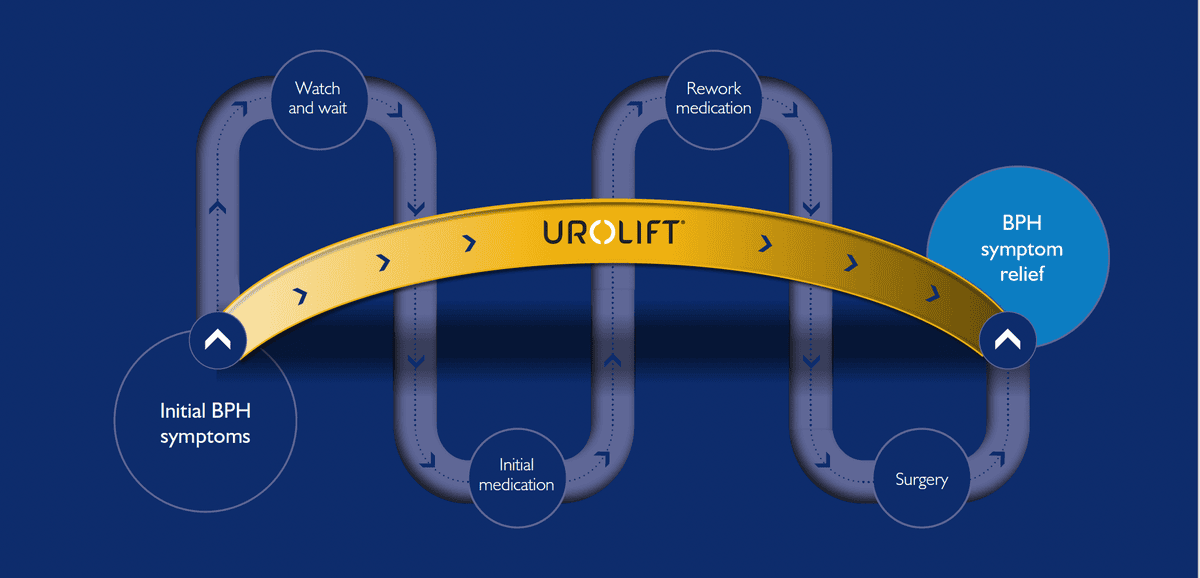
Accelerate your path to better living
When booking a urology appointment, ask if any recommended diagnostics can be performed while you're there.
If you are diagnosed with BPH, your urologist can discuss treatment options and help you decide on the best approach for long-term symptom relief.
It's not just about the prostate
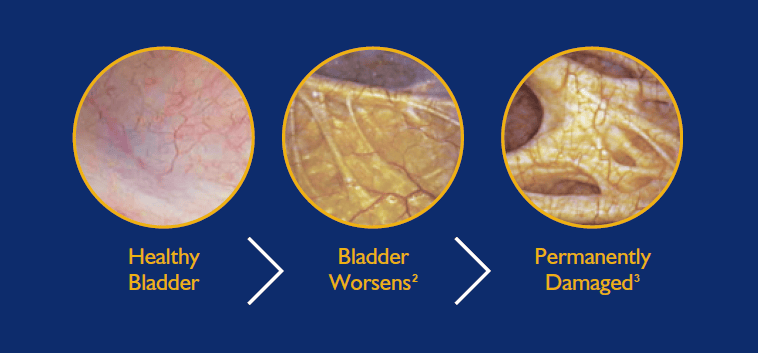
BPH can affect your bladder health if left untreated and may lead to difficulty urinating or urinary tract infections. In extreme cases, problems such as bladder stones or even the ongoing need for a catheter may occur.1-3 That’s why it’s important to be proactive and talk to a urologist about prostate health.
Don't assume it's too soon
Even men in their forties can experience BPH symptoms. Enlarged prostate is the leading reason men visit a urologist.5 Earlier intervention treatments, such as the UroLift™ System, can help preserve bladder health and improve your quality of life.4
Get Personalized BPH Information, at Your Fingertips
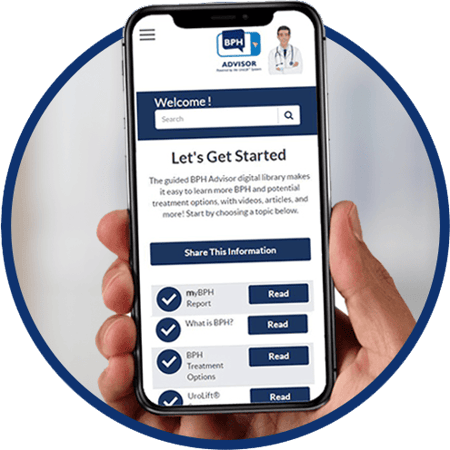
BPH Advisor™ is a free patient education program on enlarged prostate, developed with the input of board-certified urologists.
Following a brief questionnaire, you receive:
- Your BPH symptom score
- A detailed report based on your responses
- Information about BPH and treatment options, by text or email
Along with your doctor, BPH Advisor can help you choose the treatment plan that's best for you.
Time to Take Care of #1
Ask About the UroLift™ System
If you're ready to kick BPH symptoms to the curb and get back on track, ask your urologist if the UroLift™ System could be right for you.
- The #1 minimally invasive BPH procedure chosen by urologists and their patients in the U.S.†
- A proven option for patients looking for an alternative to medications or major surgery.4
- Covered by Medicare, national, and commercial plans, when medical criteria are met
BPH and your bladder. Benign prostatic hyperplasia, also known as BPH, is a condition in which the prostate is enlarged. It is a common condition in men forty five years or older and may cause bothersome urinary symptoms such as getting up multiple urinate, a weak urinary stream, or urinary urgency. This condition can significantly reduce your quality of life. BPH can be progressive if left untreated and could lead to urinary retention, which means you cannot empty all the urine from your bladder. This causes bladder issues and decreased quality of life. Remember, having BPH does not mean you have prostate cancer. As BPH progresses, the prostate gland enlarges and the urethra constricts. This may lead to the early stages of bladder outlet obstruction. Prostate obstruction can eventually lead to bladder damage, which can result in symptoms such as urinary urgency and frequency. Over time, the bladder muscle suffers damage and can no longer compensate, leading to diminished flow and incomplete emptying. Can BPH medications address your long term bladder health? While medications may alleviate and slow the progression of symptoms, BPH drugs do not address bladder outlet obstruction and potential bladder deterioration. Changes to the bladder, if left untreated for too long, can become irreversible, and permanent bladder damage can lead to the need for a permanent bladder catheter. Earlier intervention treatments that address the obstruction may help preserve bladder health and improve your quality of life. Be sure to talk to your urologist about your bladder health and ask about BPH treatment options.
How BPH Can Impact Bladder Health (2 minute video)
What is the UroLift System procedure? Treatment with the UroLift System offers rapid relief for men living with symptoms of an enlarged prostate. It can break the cycle of BPH medications and how they make a person feel, all with fewer risks than reported for traditional surgery. It is usually performed in an outpatient setting, and most patients typically return home the same day without a catheter. The goal of the UroLift system treatment is to relieve BPH symptoms so you can get back to your life and resume your daily activities. The UroLift system includes a revolutionary approach to treat your enlarged prostate that lifts and holds the enlarged prostate tissue so it no longer blocks the urethra. Unlike other leading BPH procedures, the treatment does not require heating, cutting, or removal of the prostate tissue, offering a mechanical solution to a mechanical problem. The treatment offers rapid relief of your BPH symptoms with less risks often associated with the downsides of medications. The Urolift system offers a fast recovery with a low risk profile, and it is the only leading BPH procedure shown to not cause new and lasting sexual dysfunction. Prior to your UroLift system treatment, your doctor will discuss how to prepare for your treatment, including potentially temporarily discontinuing certain medications. Your doctor will also discuss with you proper post treatment care. Most patients do not require a catheter after having the UroLift system treatment. Most patients get back to their normal daily activities within days. The UroLift system, the proven minimally invasive BPH treatment that fills the gap between prescription medications and more invasive surgical procedures. Most common side effects are temporary and can include discomfort when urinating, urgency, inability to control the urge, pelvic pain, and some blood in the urine. Rare side effects, including bleeding and infection, may lead to a serious outcome and may require intervention. Visit urolift dot com.
How The UroLift™ System Works - Watch This Brief Video
“Men shouldn’t be embarrassed to talk about this common problem, I’m proof that there is help available and that it’s important to talk honestly and openly with your doctor.”‡

Who is an ideal candidate for the UroLift procedure for BPH?
You may be a candidate if you are a male, 45 years of age or older, have symptoms relating to BPH, and your prostate size is 100 grams or smaller. Speak with your urologist to see if the UroLift™ System treatment is right for you.
Find a UroLift System Trained PhysicianWhat tests or evaluations are required before having the UroLift system treatment?
Your physician will determine which examinations are appropriate for you. The physician will likely ask you to fill out a questionnaire to assess your symptoms, called IPSS (International Prostate Symptom Score). Additionally, some of the common examinations include a cystoscopy, Digital Rectal Exam (DRE), Transrectal Ultrasonography (TRUS), bladder ultrasound, and urinalysis.
MAC03242-04 Rev A
Is the UroLift procedure covered by insurance or Medicare?
Most carriers cover UroLift including Medicare, Anthem, BC/BS, UHC, Aetna and TriCare. Contact your insurance company for more information.
MAC03242-09 Rev A
References
1. AUA BPH Guidelines 2021
2. Flanigan, J Urol 1998
3. Tubaro, Drugs Aging 2003
4. Roehrborn Can J Urol 2017
5. IMS Health NDTI Urology Specialty Profile, July 2012 - June 2013
* Survey of US men aged 45+ who have experienced at least one urinary symptom commonly associated with BPH (enlarged prostate), conducted by Teleflex in 2021. Data on file, n=1020.
**Survey of US men aged 45+ who have experienced at least one urinary symptom commonly associated with BPH (enlarged prostate), conducted by Teleflex in 2021. Data on file, n=1052.
§ Survey of US men aged 40+ who have been diagnosed with BPH (enlarged prostate) and are/have been treated with BPH medications, conducted by Teleflex in 2020. Data on file, n= 1,143.
† U.S. 2022 estimates based on US Market Model 2022-24 (5-17-22 FINAL), which is in part based on Symphony Health PatientSource® 2018-21, as is and with no representations/warranties, including accuracy or completeness.
‡ As with any medical procedure, individual results may vary. See patient safety for more information.
MAC11001-01 Rev A